
Who’s a Good Dog?
Dog etiquette of Piha - for Good Boys & Good Girls.
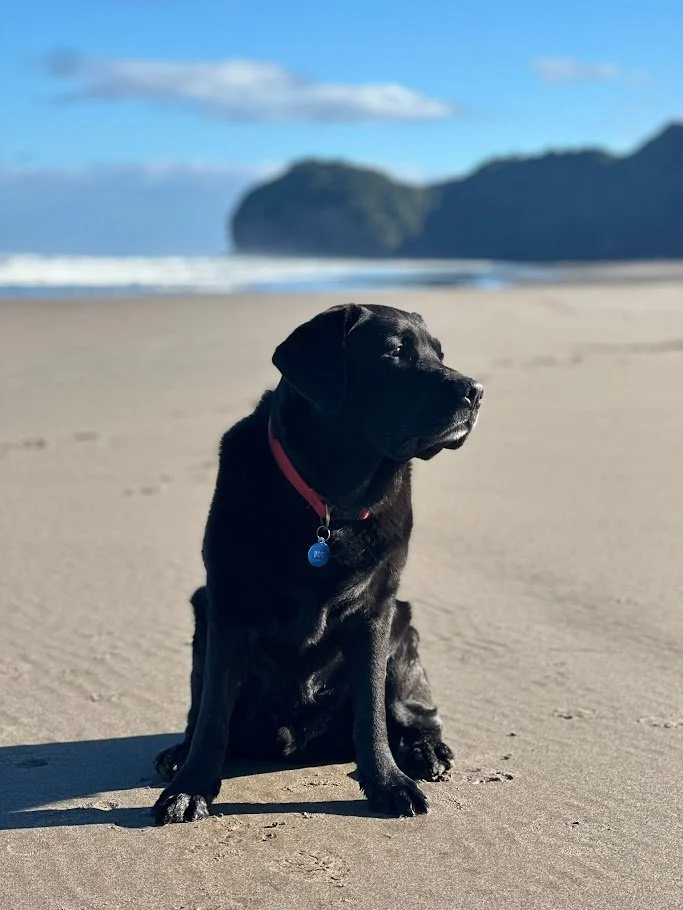
Let’s keep Piha friendly for all by being great dog owners. In loving memory of Dog, a Piha resident.
Piha is a shared place
The best official source is Auckland Council's dog access rules page:
Auckland Council – Dog access rules and maps
One of the things people love most about Piha is that it still feels wild. Dogs are part of that picture. Many locals have them, visitors bring them, and a good dog walk is one of life's great pleasures.
But Piha is also home to wildlife, surfers, swimmers, families, runners, fishermen, and people who simply come here for peace and quiet. Good dog etiquette is about recognising that we all share the same coastline.
Most problems aren't caused by bad dogs. They're caused by owners who assume everyone loves dogs as much as they do.
Where dogs can and can’t go
The most important thing to know is that dogs are not permitted on Piha Beach itself, including the main beach south of Lion Rock and The Gap area. These restrictions exist to protect vulnerable wildlife, particularly nesting seabirds and little penguins (kororā), which use the rocky coastline and surrounding habitat.
One area that deserves particular attention is Kohunui Bay, at the very northern end of North Piha Beach. This area is a designated no-dog zone and is clearly marked by signage at the toe of the dunes and along the high-tide line. It supports one of Piha's most important populations of little penguins and other coastal wildlife.
North Piha provides designated areas where dogs are welcome, including off-leash exercise areas, along with some on-leash sections designed to balance recreation with wildlife protection.
If you're unsure, assume there is a reason for the sign. Piha's rules can seem complicated until you understand that most of them exist to protect either wildlife or people.
Wildlife matters more than you think
The wildlife around Piha is often invisible until you know where to look.
A dog doesn't need to catch a bird to cause harm. Chasing, flushing, or repeatedly disturbing wildlife can prevent feeding, disrupt nesting behaviour, or cause animals to abandon areas altogether.
What looks like harmless curiosity to an owner can be experienced as a predator threat by wildlife.
If your dog is interested in birds, rocky shelves, caves, dunes, or dense coastal vegetation, that's usually your cue to put them on a lead and move them away.
You may also notice fenced sections of beach, dunes, stream margins, or other habitat around Piha. These areas have usually been protected because wildlife is nesting, breeding, or using the habitat for shelter.
If while walking your dog you come across a fenced area, it deserves the highest level of consideration. Even if you're in an area where dogs are normally allowed off leash, consider putting your dog back on a lead and giving the area plenty of space.
This is particularly important for the endangered Northern New Zealand dotterel. Only around 2,600 remain across the North Island, and Piha's beach and stream environments provide important nesting habitat. Dotterels can be found around the Marowhara Stream mouth, along sections of the beach, and toward the United North Piha Surf Life Saving Club tower.
Disturbance alone can be enough to cause stress to nesting birds. Giving wildlife space is one of the simplest and most valuable things dog owners can do.
Off-leash doesn’t mean out of control
A common misunderstanding is that “off-leash” means dogs can do whatever they like.
A well-behaved off-leash dog:
· Comes back immediately when called.
· Doesn’t approach strangers uninvited.
· Doesn’t rush children.
· Doesn’t chase wildlife.
· Doesn’t run up to dogs that are on leads.
· Doesn’t jump on people.
If your dog’s recall only works when it’s convenient, it’s not really recall.
One of the best rules of thumb is simple: if you can’t reliably call your dog back, keep them on a lead.
Not everyone wants to meet your dog
This is probably the biggest source of tension between dog owners and everyone else.
Many people love dogs. Some people are frightened of them. Some have had bad experiences. Some are training assistance dogs. Some are simply enjoying a walk and don’t want muddy paws on their clothes. A dog running up enthusiastically may feel friendly to you, but intimidating to someone else.
Always assume people would prefer to be given a choice.
The lead is a courtesy, not a punishment
Many experienced dog owners use a lead proactively rather than reactively.
Put your dog on a lead when:
· Passing families with small children.
· Passing horses.
· Passing other dogs on leads.
· Moving through busy car parks.
· Approaching wildlife areas.
· Near surf club patrol areas or crowded public spaces.
· Your dog is excited, overstimulated, or distracted.
A lead isn’t an admission that your dog is badly behaved. It’s often a sign that you’re a considerate owner.
Pick up after your dog
This shouldn’t need saying, but it still does.
Leaving dog waste on beaches, tracks, berms, or roadside edges affects everyone.
The “I’ll get it on the way back” approach rarely works. Carry bags. Use them. Take them home if there isn’t a bin handy (there are bins outside of the toilets and at the end of most of the beach access walkways).
And please don’t hang filled bags in trees or leave them beside tracks for someone else to deal with.
Water safety for dogs
Piha’s ocean is powerful. Even strong dogs can be caught out by surf, rips, currents, and sudden drops.
Be particularly careful around:
· Large surf.
· Fast-moving lagoon outlets.
· Rocky shelves.
· Strong currents around river mouths.
· High tides around rocks and headlands.
If you wouldn’t confidently enter the water yourself, think carefully before encouraging your dog to do so.
Be a local, even if you’re visiting
The best dog owners in Piha aren’t usually the ones with the most obedient dogs.
They’re the ones who pay attention.
They read the signs.
They respect wildlife.
They understand that not every space is for dogs.
They leave places cleaner than they found them.
And they remember that sharing a beautiful place means occasionally putting the needs of others ahead of their own convenience.
That’s what good dog etiquette looks like at Piha.
